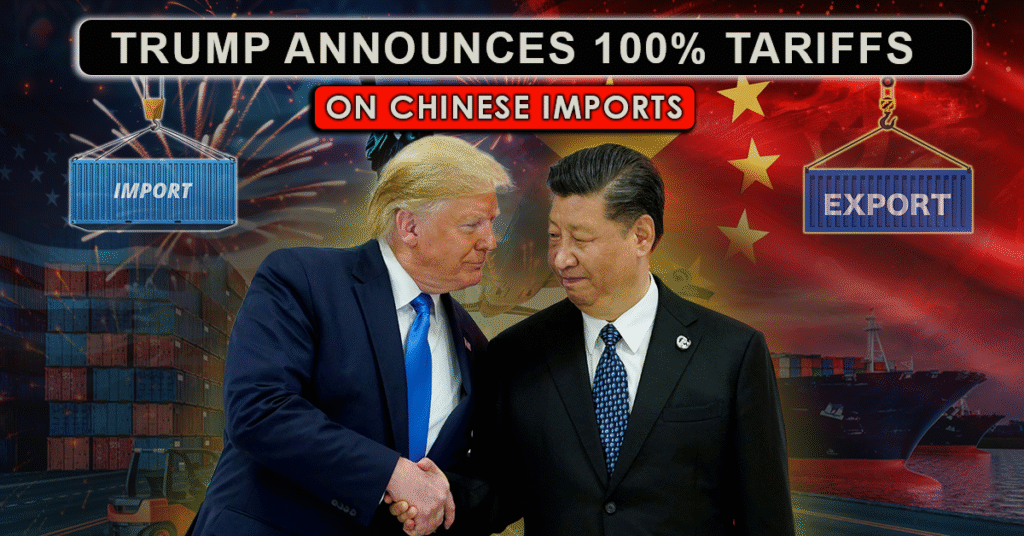
On Friday, President Donald Trump made a very dramatic announcement of the current trade conflict with China, declaring that he was planning a 100 per cent tariff on Chinese goods, to take effect on November 1, 2025 or possibly earlier. The announcement is a big change in the trade environment as it occurs during a time when Beijing has been trying to tighten its export quotas on rare earth minerals, which are vital to the U.S. technology, defence and manufacturing industries.
In his remarks, President Trump accused China of its policies as being hostile and indicated that the United States would retaliate with reciprocal policies such as the imposition of export restrictions on American software and critical technology, a significant measure that may have a significant effect on the global supply chains. The administration pointed out that the time when they will impose such tariffs and restrictions could be determined by the next move of Beijing.
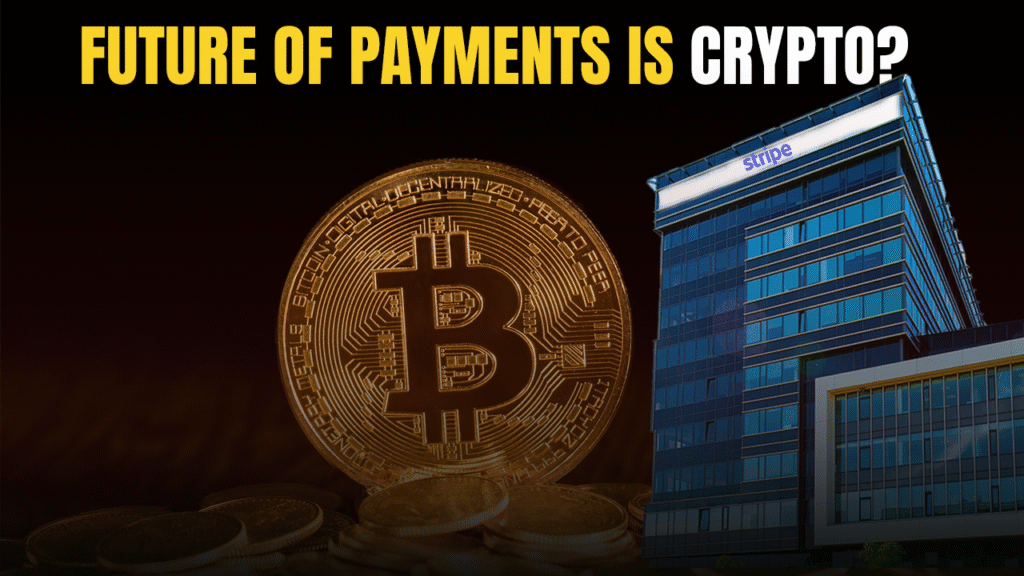
The reaction of the markets was rapid and harsh. U.S. equity markets, in an hour of the announcement, plunged into heavy losses as the S&P 500 fell by 2.8 per cent and the Nasdaq fell by an average of 3.7 per cent. There was a concern about the chances of a long-term trade war, supply chain pressure and increased prices of consumer electronics and industrial products by investors. Another impact of the news on the crypto markets was the volatility, as Bitcoin and other major cryptocurrencies suddenly fell as risk-averse investors ran to find safe assets to invest in in the face of global economic uncertainty.
The new tariffs are a significant increase on the present tariffs, which are currently levying an average of 30 per cent tariff on a wide variety of Chinese imports. According to analysts, a 100 per cent tariff would be very far-reaching in terms of its impact on the U.S.
Manufacturers, consumers, as well as the fragile equilibrium of international trade. Some technology and industrial companies have already cited problems in sourcing, and a further upsurge may worsen these issues.
The news also indicates a larger geopolitical aspect to it, and technologies and rare earth resources have been the key areas of dispute. The United States is dependent on China when it comes to rare earths, which are critical in the manufacture of semiconductors, batteries, military equipment, and renewable energy technologies. The approach suggested by President Trump, thus, indicates not only a response on the economic level but also a national security factor that should protect the U.S. technological superiority.
There is an implication split among market analysts. It is predicted that the tariffs may compel companies to diversify supply chains, which may speed up domestic manufacturing programs. Others have warned that this may slow economic growth in other parts of the globe, heighten inflationary pressures, and introduce more volatility in foreign markets. Being viewed as a protection in the face of the instability of the conventional market, the crypto industry is experiencing increased activity, with investors now paying close attention to the correlations between trade dynamics and the work of digital assets.
This action also jeopardises the fact that there was a momentous improvement in this year, with the United States and China having settled on some tariff cuts, and subsequent talks were promising to be fruitful in de-escalating the trade war. President Trump, in his turn, showed his doubt about the possibilities of further diplomatic interaction with Chinese President Xi Jinping, which means that the way to reconciliation could be accompanied by additional difficulties.
The world is on the cusp of an era of greater uncertainty among both businesses and policymakers. Analysts underline the necessity of agility because the supply chains, investment plans, and trade agreements with other countries can be reconsidered.
The effect on the adoption of cryptocurrencies and the volumes of trading of Bitcoin can persist too, as traders respond to macroeconomic risks and move to other forms of stores of value.
With the world getting ready to face the sweeping changes, the focus is now on the real meaning of introducing tariffs and export controls.
The next question on the mind of the people will be whether Beijing will react with its countermeasures, and this may lead to another intensification of the same, which may impact trade, markets and international economic confidence. In the meantime, investors, technology companies, and consumers in general should endure a season of increased volatility and uncertainty as both conventional and digital monetary markets are going to be experiencing a period of booms and busts.

A digital marketer possessing excellent knowledge and skill in off-page, on page and local SEO is competent in the challenging environment. Hard-working, energetic, and a quick learner for any task delegated. Enthusiastic to learn and constantly upgrade knowledge. Mohit brings over 2 years of experience in crafting content that not only ranks well but also provides valuable insights to readers.