
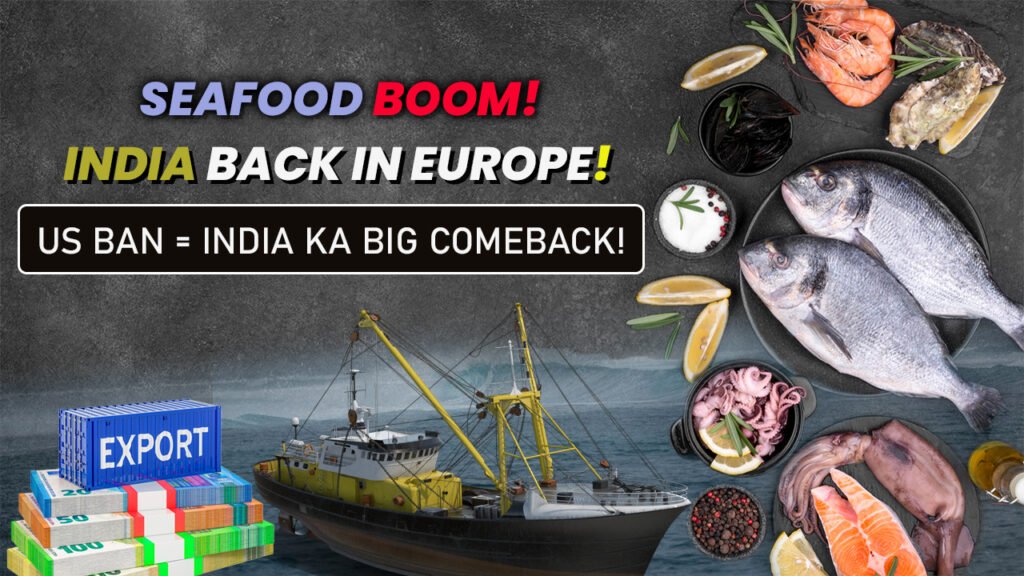
The seafood industry in India, which is among the most reliable sources of foreign-exchange in this country, is currently experiencing a surprising rebound, with various international markets opening their borders, at the very time the US market is sending a shock of high new tariffs. This twist is at the most crucial time particularly to the traders, investors and even crypto enthusiasts who keenly follow market movement of commodities around the world as an indicator.
The US has long been the largest importer of Indian shrimp with close to one-third of the total number being exported to the US. The tariff hike by Washington has come abruptly and broke the rhythm. Exporters who were already grappling with increasing costs of logistics, and stricter quality standards are now looking at diminishing margins and dubious contracts.
But in the twist of things, previously dormant, stagnant, and even too restrictive, markets are starting to open, generating a new wave of confidence in the seafood export business of India, with a value of $8 billion.
Strong demand to Europe is opened
Following several months of low consumption prompted by inflation and energy price crisis, the EU market is back with fresh appetite on the Indian seafood particularly shrimp, squid, cuttlefish, and value added products. Consumers in Spain, Italy, Netherlands and Belgium are making early purchases before the end of the holiday season.
According to industry bodies, the exporters who relied on US orders are rapidly changing their strategies, renegotiating the European contracts, and even adopting an alternative style of processing to fit the European palates.
To traders and the individuals engaged in investing in the global market, this is an indication of possible rebalancing of the agri-commodity exportation in India- one that would affect not only forex earnings, but also the behaviour of other markets such as cold-chain logistics, aquaculture feeds and marine insurance.
Russia Shocks with Huge Acquisitions
However, the greatest surprise is by the Russians. The aggressive buyer of the geopolitical situation has become Moscow, which is no longer satisfied with finding new suppliers to find new ways to circumvent its old bases, violated by sanctions and diplomatic pressure.
Indian exporters have registered huge quantity requests of crabs, surimi and cheap varieties of shrimps. The trade mechanism pegged to the ruble in Russia and the rupee settlement in India facilitates trade. This comes as a great relief at a time when the dollar-settled exports to the US are losing their profitability following tariffs.
Other analysts go as far as to observe that commodity-linked crypto traders are tracking such movements, especially those of stablecoins associated with imports-exports settlement, as indicators of shifting trade routes.
Australia comes back as a high-end market
Australia, which had previously increased biosecurity measures, is currently relaxing entry requirements for more Indian seafood items. White-leg shrimp of high quality and frozen fish products are gaining new consumers in Sydney, Melbourne and Brisbane.
It is a premium market, and the margins are considerably higher compared to destinations with heavy volumes such as China and Vietnam. As Australia opens its borders once more, the exporters get an opportunity to recover lost ground and spread the risks across different continents.
In the US, Tariff Shock Still Remains Giant
However, the US tariff increase has an impact regardless of the new global openings. Margins are declining, shipments in containers are decelerating, and a number of exporters are concerned about late payments.
The industry is, however, opting to be resilient instead of panicking. The companies are no longer relying on a single, leading market, but are looking at diversified paths of trade, a tactic that is quite well prescribed in the modern-day investing knowledge: never place all of your eggs in a single basket.
A New Trade Map for 2025?
As the existing trends might suggest, the story of seafood exports in India can also experience an abrupt change, such as that which global trading and even crypto cycles experience, with drastic interruptions and new opportunities presenting themselves in unpredictable places.
As Europe, Russia and Australia prepare to import more, and India aggressively pursues new trade deals, 2025 may be the year that the country not only rebounds against US tariff pressure, but also has a more powerful and geographically diversified export base.
This is not the first time that Indian exporters have been through a shock. It is a warning that the world markets, be it commodities, investments or the crypto world, tend to go through cycles, and at times opportunity has shown itself where there was at one time doubt.

A digital marketer possessing excellent knowledge and skill in off-page, on page and local SEO is competent in the challenging environment. Hard-working, energetic, and a quick learner for any task delegated. Enthusiastic to learn and constantly upgrade knowledge. Mohit brings over 2 years of experience in crafting content that not only ranks well but also provides valuable insights to readers.