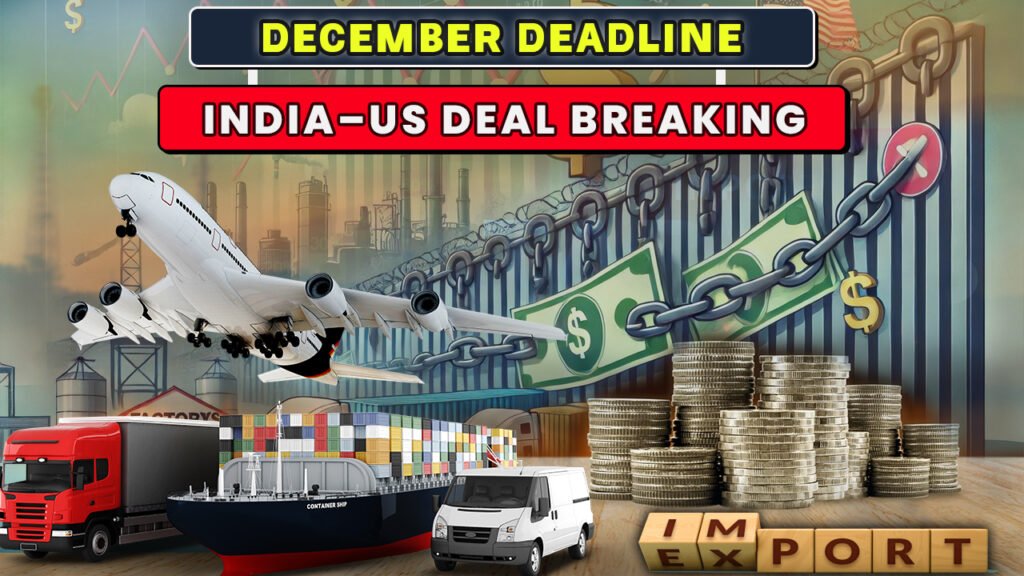
New Delhi is optimistic that the first phase of the India–US trade agreement, or at least a tariff-relief framework, can be completed by the end of 2025, with officials urging both sides to settle remaining gaps through a mutually acceptable “landing zone.”
Key Points
- According to the Commerce Secretary of India, Rajesh Agarwal, most of the problems they had with the US have already been settled, and they should have a deal by the end of the year.
- Two simultaneous negotiations are being made to conduct a long-term trade agreement and a shorter framework deal that covers tariff disagreements.
- The structure is meant to relieve the pressure of high bilateral tariffs that have lately been levied on Indian exports.
- According to India, there are only a few technical and political issues left to finalisation.
- The analysts assume that the partnership will encourage exports in India and increase the Indian-US alignment in the global politics of trade.
Introduction
India is so confident that its first tranche of trade agreement with the United States can be closed by the end of the year. During a speech at an industry event, Commerce Secretary Rajesh Agarwal mentioned that the two countries have reduced their differences and that only a right landing zone is required to secure the first phase of the deal. Agarwal opines that the majority of the problems at the negotiation levels have already been sorted out, and only a few issues are still to be resolved with political consensus.
The India–US trade corridor has faced turbulence in recent years due to tariff escalations and shifting geopolitical priorities. The United States has imposed high reciprocal tariffs on several Indian goods, including a 25% duty and an additional levy linked to India’s continued oil purchases from Russia.
To address this, negotiators are working simultaneously on:
- a comprehensive long-term Bilateral Trade Agreement, and
- a short-term tariff framework deal designed to resolve immediate trade stresses faced by Indian exporters.
Agarwal said that discussions have made significant progress and that the remaining disagreements, primarily around market access and regulatory concerns, are manageable.
If implemented, the first tranche is expected to help revive sectors such as textiles, gems and jewellery, leather goods, agriculture, and chemicals, many of which have been hit by recent U.S. tariff measures.
Background of the Issue
The past decade has seen trade relations between India and the US hit several friction points. This was aggravated by the fact that the United States imposed high reciprocal tariffs on the imports of India, and India looked into a gradual negotiation approach.
Rather than waiting until a comprehensive Bilateral Trade Agreement is signed, which may take years to complete, both groups would now start with a smaller framework agreement that would address urgent tariff issues and clean up the situation, enabling exporters and investors to get on with business.
The bilateral strategy recognises the magnitude and intricacy of the trade partnership that cuts across goods, services, regulations, and entry obstacles into the market.
Statements from Both Sides
India’s Position
“I think our expectations, we are very optimistic and very hopeful that we should find a solution within this calendar year”
He emphasised that both countries need to find the “right landing zone” to make the first phase workable.
United States’ Side
While the U.S. has not issued a detailed public statement recently, officials are reported to be participating regularly in virtual negotiations and are open to a tariff framework, provided regulatory concerns and market-access issues are resolved in a balanced manner.
What This Means for Global Trade and Politics
An effective trade deal between India and the US (even during stages) would transform economic relations across the Indo-Pacific. In the case of India, the agreement would bring much-needed relief to the exporters who were affected by tariff shocks.
To the United States, it enhances its relationship with one of the fastest-growing major economies in the world at a time when diversification of supply chain and geopolitical rivalry is transforming trade policies.
The relocation can also be used as an example of how the future trade deals between the great economies should be made to proceed in an orderly, more gradual manner, but not the extensive mega-deals.
Expert and Analyst Reactions
Trade analysts consider the development as good, following months of tariff disputes. Experts observe the gradual approach to be viable: short-term relief of the economy is provided, but no rush is made to start bargaining on such hard-to-negotiate matters as agriculture, digital commerce regulations, and intellectual-property standards.
The economists warn, however, that a framework can be signed in the near future, but more of the structural problems will extend talks far into 2026 and beyond.
Future Implications
In the event of the default of the first tranche:
- Multiple labour-intensive sectors might be revived by the Indian exporters.
- The U.S. can be able to have a more reliable and predictable trade partner with India.
- The acquisition would potentially create opportunities in collaboration within semiconductors, digital services and cleaner energy and advanced manufacturing.
- A consistent tariff regime can motivate more American firms to diversify supply chains in India.
In case of procrastination, both nations might have a complicated time in the subsequent round of negotiation, and the diplomatic process might drag on.

A digital marketer possessing excellent knowledge and skill in off-page, on page and local SEO is competent in the challenging environment. Hard-working, energetic, and a quick learner for any task delegated. Enthusiastic to learn and constantly upgrade knowledge. Mohit brings over 2 years of experience in crafting content that not only ranks well but also provides valuable insights to readers.