Key Takeaways
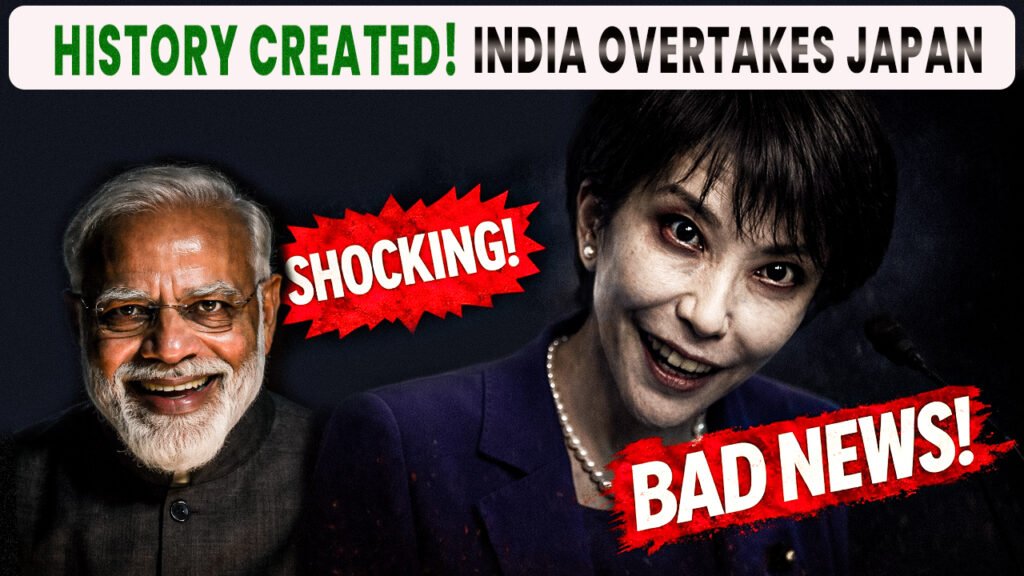
- India is the fourth-largest economy in the world, having surpassed Japan.
- GDP of the country is now estimated to be 4.18 trillion.
- India has become second to the United States, China and Germany.
- The momentum is good as the growth in the real GDP was 8.2% in the second quarter.
- India has an estimated chance to join the three leading economies in the world within 2.5-3 years provided that the growth trend does not change.
The recent press release by the government proves India officially overtaking Japan to be the fourth-largest economy in the world. India is presently the second largest economy in the world in terms of gross domestic product (GDP) of 4.18 trillion, a great milestone in the economic growth trend of the country as it comes behind the, and in terms of gross domestic product.
The news announcement was supported by the that emphasized the idea of the fast growth of India and its status as one of the fastest growing large economies in the world. India has been able to break in as a leading country in the world economic process which indicates the continuity of the momentum whose driving element has been the internal demand, investments in infrastructure and a robust services sector.
The statement of the government revealed that the real GDP growth was 8.2 percent in the second quarter, which is an indication of strong economic activity despite the uncertainties in the globe. There was also an indication by the officials that in case the current rate is maintained then India might be ranked as one of the top three economies in the world within the next 2.5 to 3 years, which is a forecast that is in line with the overall projections of medium term growth.
Economists observe that the rise of India is not just an issue of size but also speed. As other developed economies experience decelerating growth, India still enjoys positive demographics, digital infrastructure of the masses, and rising flows of investment. Nonetheless, analysts also warn that maintaining this trend will entail further reforms, creation of job opportunities, as well as manufacturing and human capital.
What experts say
NITI Aayog CEO BVR Subrahmanyam said:
“In a historic leap, India has overtaken Japan to become the fourth-largest economy in the world… India is now a $4 trillion economy, surpassing Japan, according to the latest fourth-largest economy, and is poised to displace Germany from the third rank in the next 2.5 to 3 years with projected GDP of $7.3 trillion by 2030.”
Reserve Bank of India projections, as cited by analysts, note:
“No major economy can compete with the booming 7.3% GDP growth the Reserve Bank of India forecasts in 2025-26.”
Frequently Asked Questions
It refers to the overall amount of economic production in India in the form of nominal GDP, which is the fourth largest in the world.
This rate of growth in India was higher as compared to Japan whose rate of growth was relatively low in the past years hence India outpaced Japan in terms of nominal GDP.
India, according to the government, is one of the most rapidly expanding large economies with good quarterly growth rates.
Unless the current trends of growth are changed, and the situation in the world remains favorable, India may occupy the third place in the few coming years.
Some of the important issues are job creation, income disparity, competitiveness in manufacturing, and long-term maintenance of the reforms.
This is a milestone that highlights the increased presence of India in the global economy despite the fact that policymakers and economists are keen on shifting the headline growth to broad-based and inclusive development.

A digital marketer possessing excellent knowledge and skill in off-page, on page and local SEO is competent in the challenging environment. Hard-working, energetic, and a quick learner for any task delegated. Enthusiastic to learn and constantly upgrade knowledge. Mohit brings over 2 years of experience in crafting content that not only ranks well but also provides valuable insights to readers.