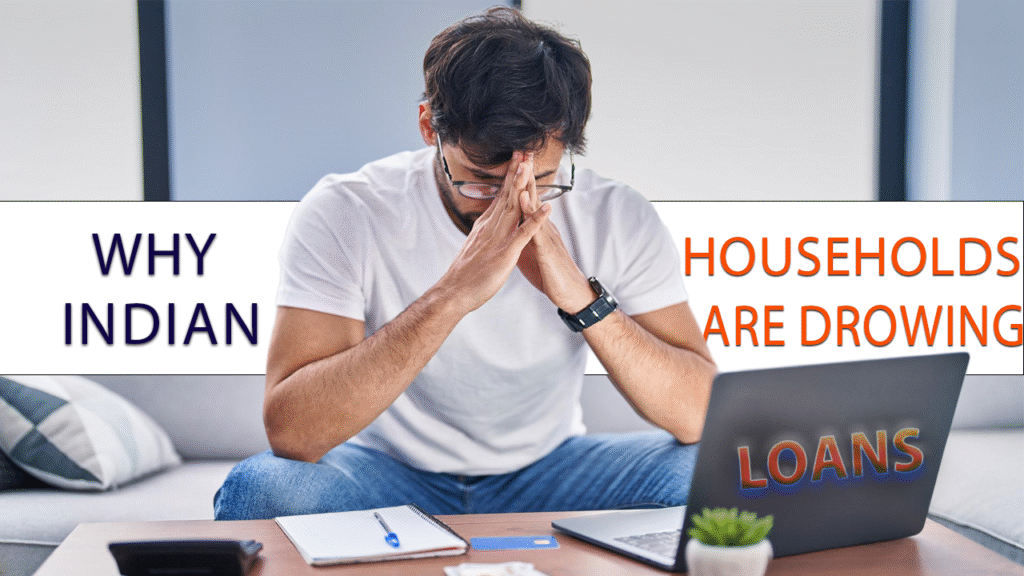
Retail consumer loans that are not used to purchase houses have increased to approximately 55 per cent of the aggregate household borrowing by financial institutions by the end of 2025, as central bank data released recently shows. This is a relatively small segment that is mostly utilised in day-to-day consumption, including personal loans, credit cards and vehicle finance; this segment has been increasing steadily over the past few years, more than housing, agriculture and business loans. The trend is an indication of a structural change in the borrowing patterns of Indian households, and increases both the growth opportunities and the financial stability issues.
Key Takeaways
- The non-housing consumer loans represent approximately 55 per cent of the total household debt, surpassing the traditional home loans in proportion.
- The increasing share of new borrowing is consumed through consumption, credit card usage, personal loans, auto loans, gold loans and small-ticket digital credit.
- This section has increased over the years and has continuously increased more than the housing, agriculture and business loans.
- The threat of overextending themselves on unsecured and expensive loans rises, especially when there is a decline in the growth of incomes.
- Regulators are also recognising the growth in household debt, but observe that overall household leverage in India is lower in comparison with other similar emerging markets.
Growth Drivers
The household debt in India has increased to approximately 41 per cent of the GDP, with consumption-oriented retail credit being the major contributor to the growth. The proportion of non-housing retail loans to total household debt has been steadily increasing since below half a decade ago to approximately 55 per cent in 2025, with the strong demand in credit cards, personal loans, auto loans and consumer durable loans.
The younger salaried consumers and urban middle-class families are borrowing more and more against future earnings to spend on lifestyle, digital consumption and necessities.
Overdue to years of successive growth in retail loan advances relative to the total bank credit, the banks and non-banking finance companies are aggressively seeking to enter the unsecured and small-ticket lending business even as they push further into the unsecured and small ticket lending business. This has been further enhanced by faster turnaround with the help of digital lending apps and fintech platforms, thus making credit more accessible and easier to access.
Emerging Risks
Regulators and economists have started raising alarms over the risks of the composition of this debt, which is increasingly becoming more of a consumption instead of an asset creation.
The wastage of housing loans also constitutes a large proportion of household loans, but the growth of loans is less pronounced than that of personal and credit card loans. Increasing loan-to-value ratios in certain products and elevated delinquencies within less favourably rated and more leveraged borrowers are being closely observed, despite the more wholesome household balance sheets.
It is also feared that families are accumulating debts at a quicker rate than they are generating investments, so that they are living off credit to earn more instead of accumulating long-term wealth. The financial analysts say that unless incomes keep up, long-term high-cost unsecured borrowing would overstretch repayment ability and reduce future consumption.
What Experts Say
According to economists and policy analysts, the consumer loans, which have risen to 55 per cent of household borrowing, are a two-edged sword. On the one hand, it indicates the increased financial inclusion, the increased access to credit, and the enhanced consumption, which contribute to the economic growth and formalisation. Conversely, a high consumption and short-term secured loans, which are unprotected and do not lead to asset accumulation, are considered a type of devastating debt that may expose the families to income shocks.
There is a consensus among many experts that there should be stricter rules of underwriting in unsecured lending, stricter credit discipline by the borrowers, and financial literacy about debt management. Policymakers, too, are being encouraged to monitor this change keenly since there might be long-term effects (including on savings, investment and macroeconomic stability) of an extreme shift towards consumption-based borrowing.
Frequently Asked Questions
It implies that housing retail loans such as personal loans, credit cards, auto loans and the like of these products in India currently constitute approximately 55 per cent of total household debt, outpacing the housing loans.
Consumer loans are more readily and faster available, particularly through digital platforms, and are commonly used to finance lifestyle, necessitative and bridging expenditures, whereas housing loans are more substantial, protracted, and closely inspected.
It has some benefits and some drawbacks: it can facilitate consumption and short-term expansion; however, overdependence on unsecured consumption debt may make households more financially vulnerable and lenders more at risk.
The household debt to GDP ratio, despite the recent increase, still stands at lower levels compared to the emerging market economies, although the difference has decreased over the past few years.
Borrowing activities should be reasonably evaluated in terms of repayment power, multiple loans should not be piled up, borrowing for need or productive uses should be given priority, and the overall debt-to-income ratio should be checked to avoid over-leveraging.
Source

A digital marketer possessing excellent knowledge and skill in off-page, on page and local SEO is competent in the challenging environment. Hard-working, energetic, and a quick learner for any task delegated. Enthusiastic to learn and constantly upgrade knowledge. Mohit brings over 2 years of experience in crafting content that not only ranks well but also provides valuable insights to readers.