
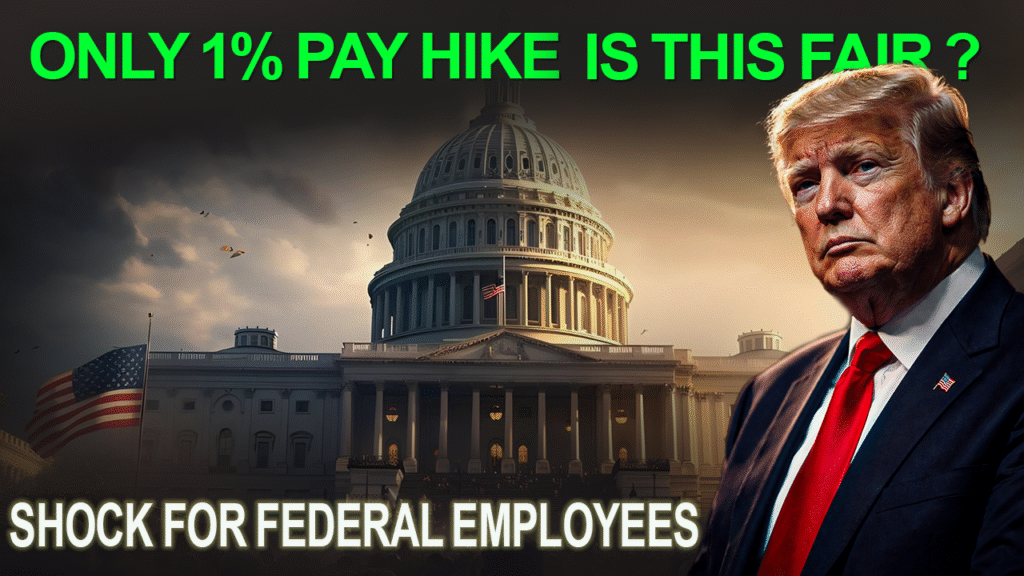
The federal government of the US will introduce a 1 %pay raise for the majority of civilian federal workers starting January 1, 2026, the smallest rise in over five years. The ruling is based on advice given by his predecessor, President Donald Trump, and the pay policy has not been reviewed in his second term.
The increase will mainly apply to those civilian workers who are in the General Schedule (GS) and will be implemented in the first full-pay period following January 1, 2026.
Key Takeaways
- The majority of the federal employees under the General Schedule will be given 1% pay raise beginning January 1, 2026.
- The increment will be effective starting with the first full compensation period of 2026.
- This represents the least civilian federal raise since 2021.
- The NDAA will increase the base pay of active-duty military personnel by 3.8%.
- The decision has been criticised by federal employee unions as not enough.
- Analysts perceive the action as economically prudent and dangerous to the morale of the staff.
Lowest Civilian Raise Since 2021
The 1% raise is similar to the 2021 federal civilian compensation increment, which was also limited to 1% during the Trump regime. Federal employees have experienced relatively larger gains since that time, in the face of inflationary pressures and economic recovery after the pandemic.
Conversely, active-duty military officers will see their base pay increase at a rate of 3.8 % in 2026, which is what the National Defence Authorisation Act (NDAA) offers them, which Trump has said he will sign.
Recent Federal Pay Trends
In recent years, federal remuneration has been changing considerably:
2022: 2.7%
2023: 4.6%
2024: 5.2%
2025: 2.0%
2026 (proposed): 1.0% civilians, 3.8% military.
This steep decline to 2026 is an indication that there is a new focus on fiscal discipline between persisting fears of federal deficits and long-term budget sustainability.
Union Reactions: Meagre and Inadequate
The proposal has been highly criticised by federal employee unions.
The National Treasury Employees Union (NTEU) characterised the 1 %increment as small and insufficient, saying it does not even match the inflation, escalating medical expenses and the growing workload of the civilian federal workers.
The leaders of the unions threatened that further pay compression would damage morale, hiring, and retention, especially in specialised and high-skilled positions in all the federal agencies.
What Experts Say
According to policy analysts, the proposal is consistent with an overall agenda of budgetary discipline.
The 1 %increase is a deliberate attempt to prevent automatic wage increases in a time of financial constraint, according to the senior public finance analyst. The trade-off, however, is the possible loss of morale of the employees.
There is also an observation by experts that even though military compensation is still comparatively cushioned as a result of the national security consideration, civilian workers tend to be the victims of the cost reduction process.
Congressional Inaction
Interestingly, the executive direction has gone unexamined after Congress has not taken any action to compel it to increase civilian pay raises. Analysts opine that the proposed figure will hardly be revised upwards without the bipartisan momentum.
Frequently Asked Questions
The increase will commence on January 1, 2026, and payment will commence in the first full pay period of the year.
The increase concerns primarily civilian federal employees who are in the General Schedule (GS) system.
The National Defence Authorisation Act regulates military pay adjustments, and it puts self-defence preparedness first. Fiscal policy and budget restrictions have a more direct effect on civilian pay.
Yes, the Congress can legislate an increase higher, but nothing has been done yet.
Yes. This is the lowest rate of increase since 2021, when the civilian federal employees were also given a 1% raise.
The majority of experts and unions dispute that a 1% increase is not able to keep up with inflation, which is, in essence, lowering the real wages.
Source:

A digital marketer possessing excellent knowledge and skill in off-page, on page and local SEO is competent in the challenging environment. Hard-working, energetic, and a quick learner for any task delegated. Enthusiastic to learn and constantly upgrade knowledge. Mohit brings over 2 years of experience in crafting content that not only ranks well but also provides valuable insights to readers.