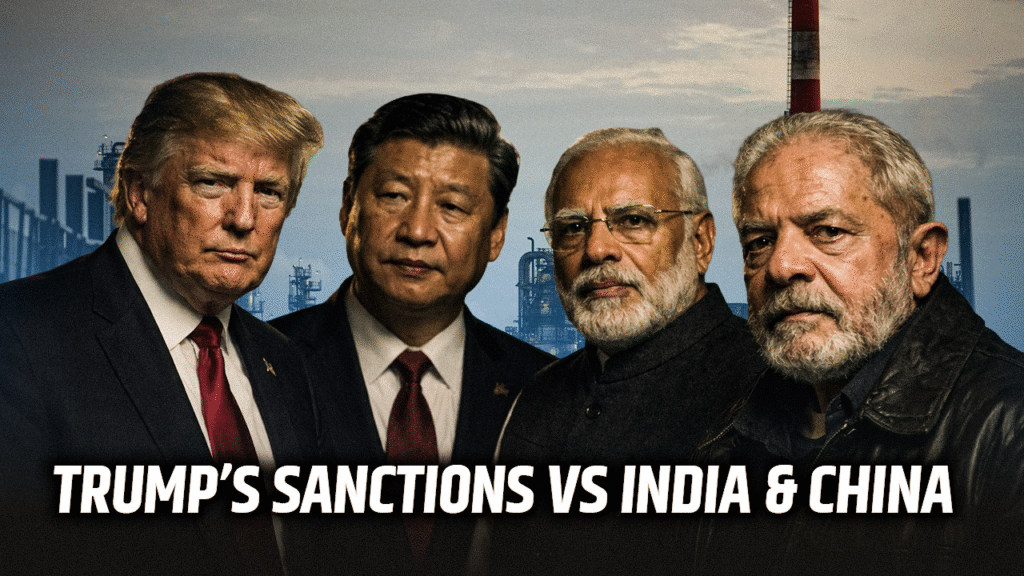
As a major twist to world geopolitics, US President Donald Trump has given the nod to proceed with a new bill on Russia sanctions, which can increase economic pressure not only on Moscow but also on those countries still purchasing Russian oil. U.S. Senator Lindsey Graham, a major sponsor of the bill, validated the move.
The proposed legislation will reduce the energy revenues of Russia, which Washington considers to be funding its military efforts in Ukraine. There is, however, a wider scope in which the bill might go beyond Russia and indirectly to China, India and Brazil, which are some of the biggest importers of Russian crude under the guise of severe trade punishments.
Key Takeaways
- Trump has endorsed the further development of a new bill on Russia sanctions.
- The bill permits high tariffs on the nations purchasing Russian oil.
- Some of the countries that will be under pressure are India, China and Brazil.
- Tariffs might go as high as 500 per cent.
- The plan may redefine the energy trade and international relations worldwide.
What the New Russia Sanctions Bill Offers
The law will provide the US government with extensive authority to administer secondary sanctions and punitive tariffs to countries that keep trading oil and energy significantly with Russia. Senator Graham said that the tariffs might rise to 500 per cent on some imports.
The point, the lawmakers claim, is to compel the largest energy consumers in Russia to re-evaluate their relationships with trade and limit the potential of Moscow to finance its war machine.
The approval of Trump allows the bill to proceed in Congress, which already has bipartisan support. The next day, a vote might occur.
The reason why India, China and Brazil are under suspicion.
A number of nations have been buying discounted Russian crude more ever since the Ukraine conflict started. In the specific case of India and China, they have become leading consumers, citing energy security and affordability. Energy and commodity trade with Russia has also been maintained in Brazil.
US legislators claim that even though such purchases are not outlawed by international law, they compromise Western sanctions that are aimed at isolating Moscow economically.
In the case of countries such as India that depend on imported oil so much, the suggested steps create apprehensions regarding the prices of energy, its supply chains, and the diplomatic equilibrium.
Possible Effect on the World Energy Markets
In case it is approved, the sanctions may have far-reaching consequences:
- Interruption of oil supply pathways in the world.
- Increased energy costs in the developing economies.
- The need to diversify energy sources among countries.
- Increased trade tension between the US and the key developing countries.
Energy analysts caution that people cannot easily switch to non-Russian crude overnight since most refineries across nations have a particular setup to process the same.
What Experts Say
According to geopolitics experts, this attack on third-party buyers is a significant escalation of the sanctions policy.
Energy trade sanctions that are imposed secondarily are a danger of extending the conflict into the economy. Although they will damage Russia, they will also undermine its relations with such strategic partners as India, said an international relations expert.
Energy economists warn of unintentional consequences
Forcing the quick transition in oil sourcing can cause a rise in costs worldwide. Other nations, such as India, have modelled their imports of energy in Russia in such a way that overnight substituting it is not realistic, an energy market strategist clarified.
It is thought that diplomacy will play a very important role in trade policy.
Sanctions are effective in combination with negotiations and alternatives. The pressure would go against us in the absence of viable energy options, a world trade expert opined.
Strategic Implications Diplomatic Implications
The bill highlights the role that energy trade has emerged to be a geopolitical weapon. Although the US presents the move as being done to weaken Russia, it can be seen by the affected countries as a form of economic sovereignty.
Specifically, India has always held the view that its energy choices are informed by national interest and cost-effectiveness rather than geopolitics.
Frequently Asked Questions
The bill will decrease the energy revenues of Russia by imposing severe fines on the countries that still purchase Russian oil and gas, by introducing high tariffs and secondary sanctions.
These are the biggest purchasers of Russian crude and energy items since the war in Ukraine.
No. The bill itself just empowers. Real sanctions would be based on the way in which the US administration executes the law.
Yes. Analysts indicate that the destabilisation of the established supply chains has the potential of increasing further the oil prices in the world, particularly in the developing economies of the world.
Not yet. It is yet to be approved by the US Congress in both houses to become a law.
Source:

A digital marketer possessing excellent knowledge and skill in off-page, on page and local SEO is competent in the challenging environment. Hard-working, energetic, and a quick learner for any task delegated. Enthusiastic to learn and constantly upgrade knowledge. Mohit brings over 2 years of experience in crafting content that not only ranks well but also provides valuable insights to readers.