
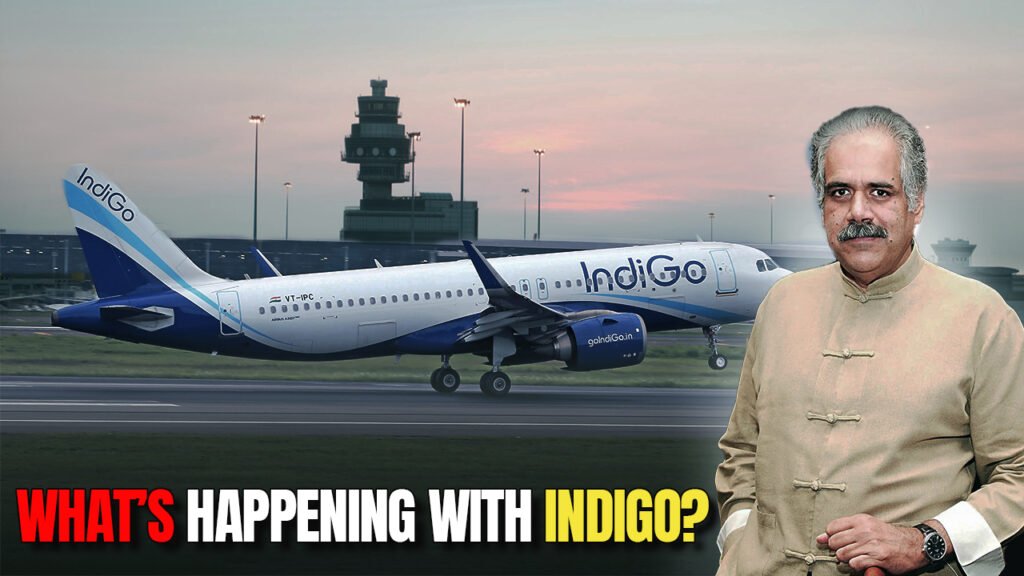
With countless cases of flight disruptions still being reported to passengers all over India, InterGlobe Aviation, the mother company of IndiGo, has established a high-ranking Crisis Management Group (CMG) to address the mounting oscillations of operations. On Sunday, the airline affirmed that the CMG has been instructed to observe the situation at all times and offer corrective actions, and the flight schedule of IndiGo will be stabilised as soon as possible.
It is decided as the number of delayed flights, cancellations, and last-minute scheduling continues to affect thousands of travellers over the last few days. IndiGo, the largest airline in India in terms of market share, has been experiencing a lot of operational pressure, and the board has been forced to step in and intervene.
Board Meetings to determine the level of the Crisis
Based on an official announcement, the IndiGo Board of Directors conducted a comprehensive briefing with the top management of the airline to know the nature and magnitude of the crisis. It was reported that the meeting was about:
The number of cancellations of flights.
- Problems with crew availability.
- Aircraft turnover and aircraft maintenance backlog.
- Airport passenger control in congested airports.
- Liaison with the Directorate General of Civil Aviation (DGCA).
Members of the board were reported to have been informed that the hiccups have caused a domino effect throughout the network and that top management is needed to rectify the situation.
Exclusive Session Results in CMG Formation
After the initial briefing, the board had a constrained internal meeting, which only directors attended, and it was resolved to officially deploy the Crisis Management Group.
The CMG includes:
- Vikram Singh, Chairman
- Gregg Saretsky, Director
- Mike Whitaker, Director
- Amitabh Kant, Director
- Chief Executive Officer Pieter Elbers.
The airline indicated that the group has been holding frequent physical and electronic meetings, among other telephonic consultations, including talks with board members who do not formally part of the CMG but are on high alert to developments.
According to an IndiGo spokesperson, the CMG has been holding regular meetings to monitor the situation and coach the management team on the way forward in achieving normal operations.
They claimed the CMG has been holding repeated meetings to manage the situation and mentor the management.
What Triggered the Crisis?
Though IndiGo has not stated officially which cause underlies, the experts of the aviation industry are convinced that it was a mixture of factors:
- Imbalances in crew scheduling may arise due to internal changes in the operations.
- The turnaround times are being pressured by high seasonal passenger demand.
- There are problems with the availability of aircraft, especially when the engines are being serviced.
- Traffic jams in leading airports such as Delhi, Mumbai, Bengaluru and Hyderabad.
Trackers in the industry observe that IndiGo is particularly susceptible to the ripple effect when a single minor aspect of the network goes haywire, since it has a scale of more than 2,000 daily flights.
Measures Underway for operational recovery
Under the guidance of CMG, IndiGo has taken several steps:
1. Monitoring of flight schedules in real-time.
A monitoring unit in the form of a war room is currently operating, and all the delays and cancellations are being evaluated on an hourly basis.
2. Crew and fleet repositioning.
The airline is also reallocating crews and reallocating used aircraft in busy routes.
3. The assistance of passengers’ activities.
There are also an additional ground staff in the metro airports to assist stranded passengers, deal with long queues, and assist with rebooking.
4. Liaisons with aviation authorities.
IndiGo is in unending liaison with the DGCA so that there is compliance and transparency with the operational constraints.
5. Communication upgrades
The airline has been instructed to enhance timely communications in the form of SMS, app messages, and in-airport communications, which is one of the main areas of pain raised by the travellers.
Passenger Effectiveness Nationwide
The disruptions have led to:
- Long delays at airports
- Lost linkages in domestic and international travellers.
- An increase in last-minute airfares due to the tightening of capacity.
- Stricter pressure on other carriers to take over overflow.
According to travel industry analysts, in case of disruption, the coming weeks may witness an imbalance in demand and supply of routes at the route level, particularly in the routes that only carry businesses, such as Delhi-Mumbai, Bengaluru-Hyderabad, and Mumbai-Chennai.
Reactions in Industry and Broader Implications
With the Airline having 60 per cent of the market share in the Indian aviation market, the crisis that is currently being experienced by IndiGo has cast doubt on the vulnerability of the Indian aviation ecosystem.
Even temporary operational shocks at IndiGo can, experts observe, inflict:
- Affect the prices of tickets in the country.
- Influence the logistics and cargo schedules.
- Influence the congestion patterns of the airports.
- Force competitors to increase capacity.
Aviation economist Rohit Kapoor said, IndiGo is the hub of connectivity in India, so whatever happens to it is amplified in the whole country. The establishment of CMG is a good indication that the airline is taking this as a high-priority emergency.
What Happens Next?
The CMG is likely to continue being active until the operations electronically recover to full capacity. Further in-house audits, like an audit of schedule operations, manpower on-site and location of operational construction will probably follow.
IndiGo has also promised its passengers that it is in the process of recovering and that the airline is working hard to ensure that inconvenience is minimised.
Aviation specialists indicate, though, that recovery plans might take different periods to recover based on:
- Normalisation of the crew availability.
- Maintenance cycles of aircraft.
- The winter travel season is the best time for passenger demand.

A digital marketer possessing excellent knowledge and skill in off-page, on page and local SEO is competent in the challenging environment. Hard-working, energetic, and a quick learner for any task delegated. Enthusiastic to learn and constantly upgrade knowledge. Mohit brings over 2 years of experience in crafting content that not only ranks well but also provides valuable insights to readers.