Key Takeaways
- India-Russia trade was to be 100 billion dollars by 2030 with a holistic economic cooperation program.
- Improved defence relationship based on joint research and development, Make-in-India co-production and maintenance centres.
- India’s Nuclear energy plans to support a 100 GW target, new Russian reactor sites announced.
- Development of infrastructure with INSTC and Arctic Routes to lower trade expenses and enhance connections.
- Close multilateral collaboration by BRICS, SCO, and G20, with Russia supporting the bid of India to have a permanent seat at the UNSC.
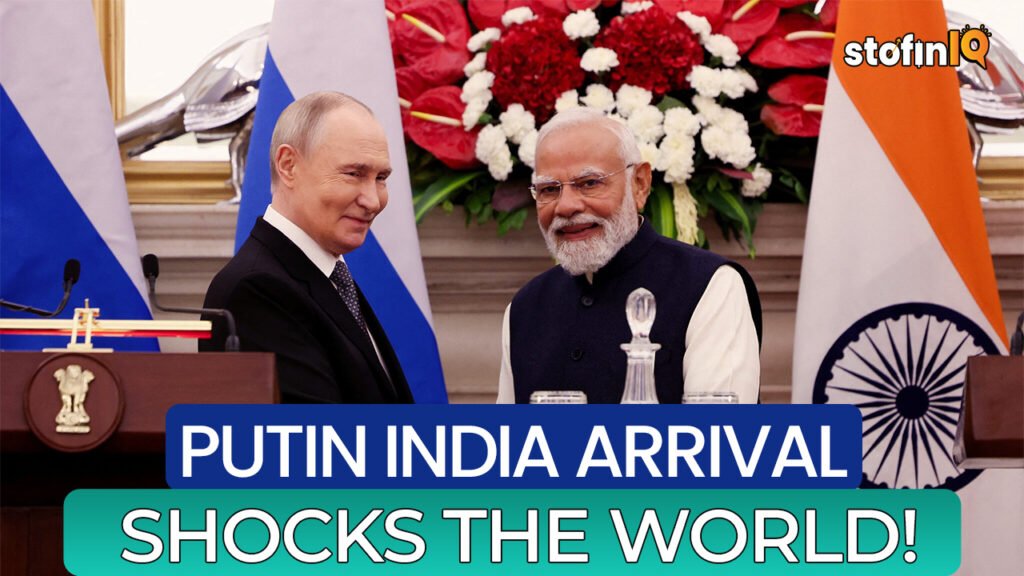
On December 5, 2025, the Russian President Vladimir Putin completed a two-day visit to India, resulting in the 23rd Annual Summit between the two countries: the 23rd India-Russia Annual Summit between Russian President Vladimir Putin and Indian Prime Minister Narendra Modi in Delhi. The summit restated the Special and Privileged Strategic Partnership that was created 25 years ago in 2000, but it states the new determination to strengthen the bonds in the context of geopolitical changes in the world. The leaders set a broad agenda that included trade development, defence relations, and energy security
y, infrastructure connectivity, and multilateral relations that will characterise the future of India-Russia relations in the next 10 years and beyond.
The growth of the Economic and Trade Partnership
One of the key objectives that was put down in the summit is to increase bilateral trade to 100 billion dollars by 2030. It was adopted the Programme of the Development of Strategic Areas of India-Russia Economic Cooperation till 2030 was adopted to develop the framework of further growth. These involve a rise in trade in domestic currencies (rupee and ruble), raising the level of interoperability in payment systems, and initiating the process of negotiations with the Free Trade Agreement with the Eurasian Economic Union. The two countries shared the agreement to ease the joint venture in fertiliser manufacturing and consider the prospects of labour mobility agreements among skilled workers to enhance the economic gains of the two countries. These steps are to diversify export baskets other than the traditional commodities and encourage high-technology investment, which ensures a solid base in the changing global economic conditions.
Strategic Defence Co-operation and Technology Transfer
India-Russia strategic partnership still depends on defence. The talks were focused on the enhancement of the joint research and development, co-production through the Make-in-India program, maintenance, and upgrades of the Russian-made platforms, including the BrahMos missile systems and the development of the next generation hypersonic technologies. Another aspect that was agreed between the two countries was the opening of Maintenance, Repair, and Overhaul (MRO) hubs to enhance the maintenance and durability of defence equipment. It has also split into nuclear energy, where both sides have agreed to accelerate current nuclear projects at Kudankulam and set up a second nuclear facility using Russian VVER-type reactors- a key move to assist India in achieving its vision of 100 GW nuclear power by 2047.
Global Cooperation, Energy Security and Connectivity
Russia became a strong ally in energy cooperation by promising a nonstop supply of oil and LNG. Combined production in the nuclear power plants highlights the use of energy in ensuring long-term economic growth. Infrastructure and connectivity became the subject of the centre stage, and there was renewed attention on operationalisation of the International North-South Transport Corridor (INSTC), and the development of the Chennai-Vladivostok transport corridor and the use of the Northern Sea Route to improve trade logistics between the two countries.
India and Russia, on the international front, have reiterated their cooperation that exists in BRICS, SCO, and the G20, and concurred on reforming the UN, counter-terrorism, and endorsed India’s hosting of BRICS in 2026. Another aspect that was mentioned to show the growing diplomatic convergence between the two countries was Russia’s approval of the United Nations Security Council permanent membership application of India.
What Experts Say
According to Dr Arvind Kumar, who is an expert in international relations, the renewal of India-Russia relations with a visionary roadmap of 2030 is an indicator of a mature relationship that does not respect the business-like approach of transactional diplomacy. Defence analyst Lt. Col. (Retd.) According to Sanjay Verma, the widened defence cooperation with co-production and maintenance facilities all augur well with the self-reliance objectives of India. Energy sector expert Dr Meera Sharma also contributes that the nuclear energy partnerships are an indication of India’s intentions to diversify its energy portfolio sustainably.
Frequently Asked Questions
It is a substantial addition to the current rates, and it seeks to diversify the trade items, as well as enhance the resilience of the economic activities, alongside the use of the national currencies to carry out transactions to decrease overreliance on the US dollar.
The joint production, technology transfer, and maintenance centres will be done on a grand scale in India, and this will improve the local defence sector and modernise the armed forces with new Russian equipment.
An agreement on the Kudankulam nuclear power plant and a second nuclear power plant that is operated by Russians, as well as a steady stream of oil and LNG, were agreed to assist in achieving the massive clean energy targets of India.
Both nations work closely in BRICS, SCO and G20, where they are coordinated in global governance reforms and security cooperation, which strengthens their strategic global partnership.
This summit is a milestone in the relations of India and Russia, which can be considered a solid base of cooperation in the spheres of economic, defence, energy, and geopolitical activities that will determine the path of the partnership until 2030 and further.
The creation of the INSTC, the Chennai-Vladivostok corridor, and the Northern Sea Route will reduce the time and costs of shipping, contributing to bilateral trade and integration of the economy of the region.

A digital marketer possessing excellent knowledge and skill in off-page, on page and local SEO is competent in the challenging environment. Hard-working, energetic, and a quick learner for any task delegated. Enthusiastic to learn and constantly upgrade knowledge. Mohit brings over 2 years of experience in crafting content that not only ranks well but also provides valuable insights to readers.